Find the clue
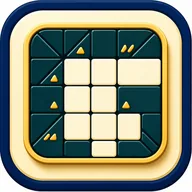
Trace from a black clue cell into the connected white cells. Stop when another black cell or the board edge ends the run. That run is the only group controlled by the clue.
Number crossword logic
Play free Kakuro number crosswords online. Fill every white cell with 1-9, match each across and down clue sum, and solve by logic instead of guessing.
Start instantly. Sign in with Google later to save progress, best times, and daily wins.
How to play
Kakuro is easiest to learn when you treat the grid like a crossword made from sums. Each clue points to one straight run of white cells, and every answer is a digit from 1 to 9.
Start by selecting a white cell on the playable board. Enter a digit with the number pad, use notes when you want to mark candidates, and press Check only when you are ready to reveal conflicts. The board accepts normal Kakuro entries; it does not ask you to type equations or submit words.
Read each black clue cell carefully. A clue in the lower-left triangle controls the across run to its right. A clue in the upper-right triangle controls the down run below it. Some clue cells carry both numbers, which means they start one across sum and one down sum at the same time.
A solved Kakuro board has every white cell filled, every across run equal to its clue, every down run equal to its clue, and no repeated digit inside any single run. A digit can appear elsewhere on the board when it belongs to a different run.
Trace from a black clue cell into the connected white cells. Stop when another black cell or the board edge ends the run. That run is the only group controlled by the clue.
Use digits 1 through 9 only. The same run cannot use a digit twice, so a two-cell clue of 4 is 1+3, not 2+2.
Every white cell belongs to an across run and a down run. A candidate is useful only when it can satisfy both sums at once.
Rule details
The rules are compact, but each one matters. Most mistakes in Kakuro come from treating a clue as a whole row, allowing a repeated digit inside a run, or forgetting that each white cell must satisfy two clues.
Every playable white square takes one digit from 1 to 9. Zero, two-digit numbers, symbols, and blanks are not valid final entries.
An across clue starts the consecutive white cells immediately to its right. The sum applies only until the run hits a black cell or the edge of the grid.
A down clue starts the consecutive white cells immediately below it. The same no-repeat and exact-sum rules apply vertically.
A run is not just a total. The digits must be distinct, so 1+4+4 is illegal for a three-cell 9 even though the arithmetic total is 9.
Number crossword
Kakuro is a logic puzzle often described as a number crossword or cross sums puzzle. The grid looks like a crossword because black clue cells divide the board into across and down answers. The answers are not words; they are digit combinations that match clue totals.
The appeal is the intersection. An across clue might allow three possible combinations, while the crossing down clue allows a different set. When those two constraints meet in one cell, the list of legal digits shrinks until a single answer remains.
That is why Kakuro searchers often compare it with Sudoku but still use crossword language. Sudoku asks where each digit can live in a row, column, and box. Kakuro asks which distinct digit set can make one clue sum, then tests that set against every crossing clue.
Black cells break the grid into short and long entries, so each clue controls a local answer instead of an entire row or column.
Digits 1-9 and no-repeat logic feel familiar to Sudoku players, but Kakuro uses clue sums rather than boxes.
You do not need advanced math. You need clean addition, combination awareness, and patience with crossings.
Why this version
This homepage is built around the playable puzzle, not a thin rules article. You can start a regular level, open a daily Kakuro puzzle, or try an unlimited seed before reading every guide section.
The v1 puzzle model uses a verified static library with deterministic mapping. Regular levels, daily packs, and unlimited seeds point to known puzzles instead of pretending that untested random boards are ready for production.
That choice is deliberately conservative. A flashy generator is not useful if it can create duplicate solutions, impossible boards, or puzzle pages that cannot be explained by the visible rules. Stable puzzle mapping keeps the first release easier to test and easier for players to trust.
Use Check when you want conflicts shown. It is a learning tool for clue sums and repeated digits, not a hidden score trap.
Notes mode lets you mark candidate digits while you compare across and down runs. That keeps the solving process visible.
Unlimited mode accepts difficulty and seed inputs, but still maps them to verified puzzles so practice remains reproducible.
Puzzle modes
Different players search for Kakuro with different intent. Some want a daily number crossword, some want a beginner-friendly path, and some want a repeatable practice board they can share or revisit.
Kakuro Puzzle supports those intents without changing the rules. Every mode still uses 1-9 digits, clue sums, no-repeat runs, and full-board validation.
The modes are separated so progress remains understandable. A daily puzzle is tied to a UTC date, a regular puzzle is tied to a level number, and an unlimited puzzle is tied to size, difficulty, and seed. Those identifiers make it clear what you solved and how to return to it.
Regular mode exposes 200 numbered levels for structured practice. Use it when you want a clear next puzzle after finishing one board.
Daily mode offers five puzzles per UTC date with stable dated URLs, giving searchers and returning players a fresh daily routine.
Unlimited mode takes size, difficulty, and seed inputs, then maps those choices deterministically to the verified puzzle library.
Strategy
Good Kakuro solving is not about trying digits until something works. It is about reducing legal combinations for each run, then using crossings to prove which digit belongs in each cell.
Short runs are the best starting points because their legal combinations are tightly limited. A two-cell 3 can only be 1 and 2. A two-cell 17 can only be 8 and 9. Extreme sums and small run lengths create early anchors.
As the board opens, watch for overlap pressure. If an across run needs one of two pairs, the down clues for each cell may reject one digit immediately. That is the moment Kakuro starts to feel like a clean logic puzzle rather than arithmetic homework.
When a run becomes nearly complete, recompute the remaining sum instead of scanning the whole board again. If a four-cell 23 already has 9 and 6, the remaining two distinct digits must total 8 and cannot use 9 or 6. This simple remainder check catches many late-game errors.
For each run, think in unordered sets first. A three-cell 6 must be 1, 2, and 3 in some order. Crossings decide the order.
Notes are strongest when they capture a real restriction. Avoid filling every cell with every digit; that adds noise instead of logic.
If a candidate duplicates another digit in the same run, it is illegal even when the sum still looks correct.
When stuck, test a candidate only until it creates a concrete impossible sum or duplicate. Long guesses usually mean a missed combination clue.
Player intent and trust
Searchers who type kakuro puzzle online, how to play kakuro, kakuro rules, kakuro strategy, or daily kakuro puzzle usually want a page that teaches the rules and lets them play immediately. This homepage keeps both jobs on one page.
The page avoids fake ratings, fake player counts, and unsupported claims. It explains the current v1 limits plainly: the puzzle library is verified, analytics and monitoring IDs remain site-specific or TBD, and cloud progress depends on production OAuth configuration.
The visible copy also stays aligned with the product. It does not promise multiplayer, rankings, paid memberships, or generated infinite puzzles. It explains regular, daily, and deterministic unlimited play because those are the modes the current Kakuro board actually supports.
The written rules describe exactly what the validator checks: filled white cells, exact across and down sums, and no repeated digit in a run.
You can start playing as a guest. Google sign-in is present for future cloud progress, but it is not required to learn or solve Kakuro.
Latest guides
Use the guides when you want a deeper explanation than the board-side tips. They cover first-play rules, sum-combination strategy, and the practical difference between Kakuro and Sudoku.
A beginner workflow for reading clue cells, entering digits, using notes, and finishing a Kakuro board without guessing.
StrategyA practical guide to combination thinking, short-run anchors, crossing pressure, and contradiction checks.
ComparisonA clear comparison for Sudoku players who want to understand clue sums, runs, and number crossword logic.
Kakuro Puzzle FAQ
Kakuro is a number crossword logic puzzle where every white cell receives one digit from 1 to 9. The black clue cells give totals for the across and down runs that start beside them, so the puzzle feels like a crossword built from arithmetic instead of words. A solved board must satisfy every clue sum and every no-repeat rule at the same time.
Select a white cell, enter a digit from 1 to 9, and keep checking the across and down clues that cross that cell. Each horizontal run must add to the clue on its left, each vertical run must add to the clue above it, and the same digit cannot appear twice inside one run. Online play makes that loop faster because you can undo, reset, use notes, and check conflicts without redrawing the grid.
A run is one uninterrupted group of white cells going across or down from a clue. For example, a two-cell run with a 17 clue can only use 8 and 9 in some order, while a three-cell run with a 6 clue can only use 1, 2, and 3. Thinking in runs is the key difference between Kakuro and normal arithmetic: the total matters, but the number of cells and the no-repeat rule matter just as much.
No. A single across or down run cannot repeat digits, even when the repeated digits would add to the clue. A 4 across two cells must be 1 and 3, not 2 and 2, and a 16 across two cells must be 7 and 9, not 8 and 8. The same digit can appear elsewhere on the board when it belongs to a different run.
No. Both games use digits 1 through 9 and reward careful elimination, but the rule systems are different. Sudoku asks each row, column, and box to contain the digits without repetition. Kakuro asks each across or down run to hit a printed sum without repeating digits. A Sudoku habit of scanning whole rows is useful, but Kakuro usually starts with clue combinations and crossing runs.
Start with the most restricted short sums, then use crossings to remove candidates. Two-cell sums such as 3, 4, 16, and 17 have very few legal pairs, so they are strong anchors. Write possible combinations before guessing, check whether a crossing run can accept each digit, and only place a number when both directions agree. A slower combination-first rhythm usually prevents more mistakes than blind arithmetic.